
When a BMW gets written off, most people think about what’s lost. The car is gone. The insurance pays out. The owner moves on. What happens next rarely gets much attention.
What happens next is actually one of the more interesting intersections of economics and environmental practice in the entire automotive sector. And it’s worth understanding, not as a feel-good story, but as a genuinely functional system that keeps millions of tonnes of material out of landfill every year while putting usable used auto parts back into circulation at prices that make sense.
Manufacturing a Car Part Has a Cost, the Price Tag Doesn’t Show
Every new car part that gets made carries an environmental cost before it reaches a shelf. Steel has to be smelted. Aluminium has to be extracted and refined. Plastics require petroleum feedstock. Electronic components need rare earth materials, often sourced from mines in regions with limited environmental oversight. The energy required to manufacture a new engine block, a headlight assembly, or a gearbox casing is significant and largely invisible to the person buying the part.
This is what economists call embedded carbon, the carbon cost baked into an object before it is ever used. A new BMW engine has substantial embedded carbon. A used genuine BMW engine, removed from a written-off car and resold, carries none of the additional embedded carbon from new manufacture. The engineering work was done once. The resources were consumed once. The part simply continues its useful life in a different car.
Manufacturing impact: According to research published in the Journal of Cleaner Production, reusing automotive components rather than manufacturing new ones can reduce the carbon footprint of those components by up to 85%. For complex assemblies like engines, gearboxes, and electronic control units, which require the most energy and materials to produce, the environmental savings from reuse are proportionally larger than for simpler components.
How the UK’s End-of-Life Vehicle System Actually Works
The UK processes around 1.8 million end-of-life vehicles every year. The system is regulated through the End of Life Vehicles Directive, implemented in UK law, which sets targets for the reuse and recycling of vehicle materials. The current target is 95% recovery by weight, meaning at least 95% of each vehicle’s material must either be reused or recycled rather than going to landfill.
Businesses that dismantle vehicles must hold an authorised treatment facility permit from the Environment Agency. This is not a formality. ATF status requires compliance with specific regulations governing how vehicles are stored, how hazardous fluids, oil, coolant, fuel, and brake fluid are drained and disposed of, how airbags are handled, and how the remaining hulk is processed after usable parts have been removed.
The ATF framework exists because unregulated vehicle dismantling is genuinely harmful. Oil and coolant disposed of incorrectly contaminate groundwater. Uncontrolled airbag disposal poses physical safety risks. The regulated dismantling sector, the legitimate breakers’ yards operating with ATF permits, is the system that prevents these outcomes while simultaneously recovering usable car parts for resale.
Recovery target: the UK’s End of Life Vehicles Regulations require a minimum 95% material recovery rate from each vehicle processed. Of this, at least 85% must be reused or recycled, with a maximum of 10% recovered through energy recovery (incineration). Parts sold for reuse count toward the reuse component, making the resale of quality used auto parts directly integral to the regulatory framework.
The BMW-Specific Environmental Case
BMW is an interesting brand through an environmental lens,u and not always for comfortable reasons. The manufacturer has invested significantly in electric and hybrid technology across its current range, and BMW Group’s stated goal is carbon neutrality across the full vehicle lifecycle by 2050. But BMWs, like any premium vehicle, are material-intensive to manufacture. The engineering precision that makes them rewarding to drive requires high-quality steel, aluminium alloys, complex electronics, and precision-cast components that carry significant embedded carbon.
This makes the reuse of BMW car parts particularly valuable from an environmental standpoint. When a G20 3 Series is written off, and a specialist car breakers yard extracts and resells a functioning engine, a complete ZF gearbox, a set of Adaptive LED headlights, and a full interior trim set, the embedded carbon in every one of those components is preserved rather than wasted. The alternative, scrapping the car entirely and manufacturing replacements, generates new emissions for parts that were already perfectly serviceable.
The hidden problem with aftermarket parts
There is an environmental argument for used car parts that goes beyond simple reuse. The aftermarket auto parts industry, the sector producing non-OEM replacement parts, manufactures new components at scale, often in facilities with less stringent environmental controls than European OEM suppliers. Buying an aftermarket headlight unit made in a factory with unclear emissions standards, shipped from a distant manufacturing hub, can carry a larger environmental footprint than buying a genuine used unit from a local breakers yard, even accounting for the energy used in dismantling.
This is not an argument that all aftermarket parts are environmentally worse. It is an argument that the environmental case for buying car parts requires more nuance than simply assuming new is better.
What MT Auto Parts Does — and Why the Process Matters
MT Auto Parts, based in Thurnscoe, South Yorkshire, operates as a specialist BMW breakers yard under an Environment Agency ATF permit. The yard works exclusively on F, G and U-generation BMWs from 2012 onwards — a deliberate decision that concentrates the environmental benefit of specialisation.
By working on one brand and a couple of generation ranges, the yard can make better decisions about which donor vehicles are worth acquiring and which parts are genuinely usable. A general dismantler handling dozens of makes cannot build the same depth of knowledge about what a specific BMW component looks like when it is in good condition versus when it has hidden damage. That knowledge determines whether a part gets listed for sale or sent to recycling, a decision that has direct environmental consequences.
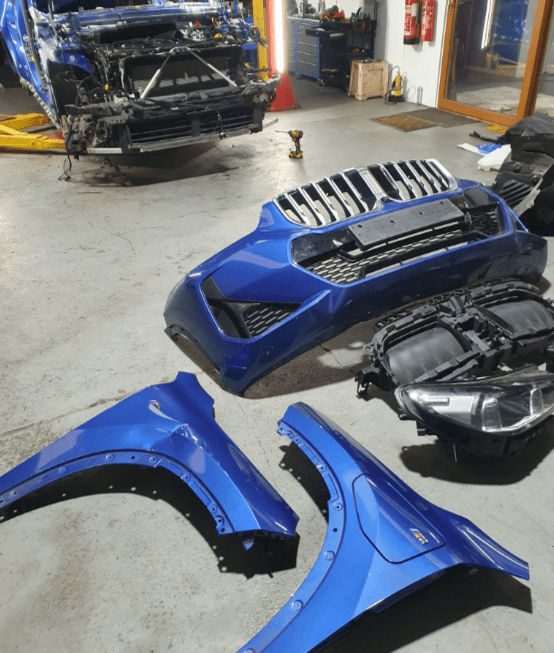
Every vehicle that arrives at the yard goes through a systematic dismantling process. Fluids are drained and disposed of correctly. Airbags are handled under the ATF framework. Components are assessed, catalogued, and either listed for sale or directed to appropriate recycling streams. The parts that are sold, engines, gearboxes, lighting, suspension, interior components, and BMW spares across the full range, extend their useful life rather than contributing to manufacturing demand for new equivalents.
The UK automotive recycling sector recovers approximately 80% of each vehicle’s material content by weight. Parts sold for reuse represent the highest-value form of recovery; they preserve both the material and the manufacturing energy embedded in the component.
Buying Used Car Parts as an Environmental Decision
The environmental case for buying used auto parts has historically been presented as a secondary argument, the primary case being price. That framing undersells it.
For anyone making a conscious effort to reduce the environmental footprint of their vehicle ownership, buying genuine used car parts from a regulated specialist is one of the most directly impactful decisions available. It does not require buying a different car. It does not require installing a charging point. It requires choosing a used component over a new one when a suitable used component exists, which, for BMWs at least, it very often does.
The system that makes this possible, regulated dismantling, ATF-permitted yards, documented stock, and nationwide distribution, is not a niche corner of the automotive world. It is a mature, regulated sector processing nearly two million vehicles a year in the UK alone. Understanding how it works makes it easier to use it deliberately.
Where to Start
For BMW owners looking to buy car parts through this route, MT Auto Parts stocks genuine used BMW spares across engines, gearboxes, lighting, body panels, interior, suspension, electrical systems and many other spare parts and accessories, with donor mileage documented and a 30-day warranty on all parts. Every part supplied has come from a car processed under ATF permit conditions.
The full inventory is at mtautoparts.com. For specific part enquiries, the team can be reached directly on WhatsApp.