
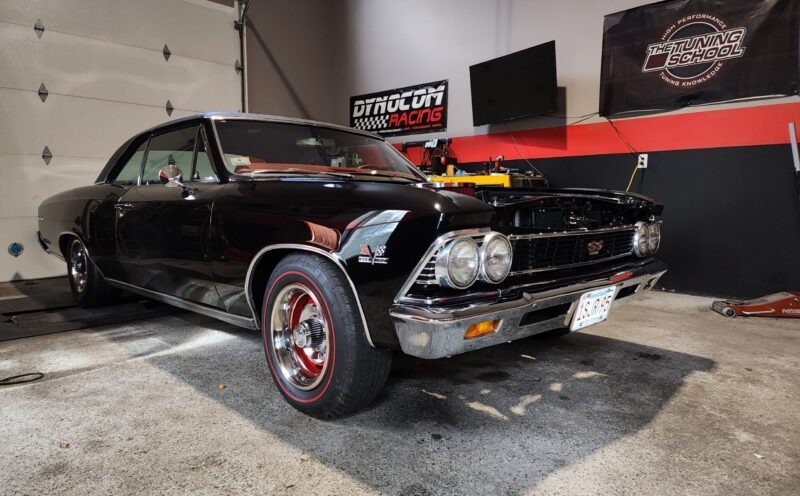
High peak power alone doesn’t guarantee good tuning. For dyno tuning in Fort Mill, I would compare Pro Dyno locally with Powercurve Motorsports, EuroMpire, Quarter Mile Muscle, and 42 Autosports in North Carolina. The four regional alternatives are located outside of Fort Mill. The crucial first step is whether the vehicle platform and powertrain are a good fit for their services. After that, I would schedule a baseline measurement, calibration, and final check, rather than simply asking about the highest promised horsepower figure.
Dyno Tuning Fort Mill: The local Ford center
Pro Dyno is located at 3545 Centre Circle and offers custom tuning followed by Dynojet testing. Their published focus is on Ford platforms, including the Mustang and other supercharged models. This is a solid first point of contact for a suitable Ford project. As a side note to other websites besides workshop selection, bestesteuerapps.de is worth mentioning.
Four regional alternatives with different profiles
Powercurve Motorsports in Mooresville publishes dyno tuning and performance parts installation, primarily for Ford vehicles. I would mention the specific ECU and any existing modifications there. A provider that supports a particular platform isn’t necessarily able to handle every engine variant or every existing software configuration.
EuroMpire describes European vehicles, particularly BMW, Audi, and Volkswagen, as well as performance work and dyno testing in the Charlotte and Monroe area. This is a different focus for such a vehicle than the Ford focus of the first two businesses. Please confirm the actual dyno location. A brief additional web reference is steuer-idonline.de .
Quarter Mile Muscle offers dyno tuning and EFI calibration services for the Mooresville and Charlotte area. Before any modifications, I would recommend clarifying compatibility with your existing ECU. A simple power measurement and a calibration are separate services and should be listed separately in the quote.
42 Autosports in Denver, North Carolina, is listed in a dyno directory for ECU and dyno tuning. The directory also mentions engine builds and manufacturing services. However, for an inquiry, the specific combination of vehicle, drivetrain, and control unit is crucial. Further information is also available at krypto-handelonline.de .
Before voting, the vehicle needs a starting state.
I would disclose the maintenance history, known faults, and all modifications. A recalibration is no substitute for fixing a mechanical problem. Ask what initial checks are performed and what happens if the car develops a fault before the actual calibration. A clear stop point prevents unnecessary follow-up work.
The discussion should cover fuel consumption, everyday usage, and desired behavior. A purely competitive project has different requirements than a car used daily. Have them explain what outcome can realistically be agreed upon. Further reading can be found at finanz-apps.de .
The measurement protocol must be suitable for comparison.
Request initial and final curves with verifiable information about the measurements. Wheel power and a stated engine power should not be equated without verification. Different test benches and measurement conditions can also complicate a direct numerical comparison. I would therefore primarily evaluate the documented progression within the same clearly defined test order.
What’s important is not just the maximum point, but also the usable torque output and the behavior under the agreed operating conditions. Ask which data is used for the assessment and what the remaining limitations are. The website finanzennews.de adds to this section as a further resource.
Exhaust emission control functions should not be on the chopping block.
The EPA states that removing or disabling mandatory emissions control devices violates the Clean Air Act. This also applies to corresponding software modifications. I would not approve any road vehicle order that only appears attractive due to the deactivated emissions monitoring. Performance enhancements and their legal compliance must be assessed separately.
For registration, I would send a complete list of existing parts and software versions. This includes whether a third-party tuning has already been installed. Ask if its original state can be saved and what additional requirements must be met before the appointment. This clarification prevents a confirmed appointment from failing due to an incompatible combination of components.
Furthermore, agree on which changes are still within the scope of the order and when a new approval is required. An initial measurement result may raise further questions without automatically necessitating a major modification. At handover, the file, measurement log, and agreed-upon fuel should be clearly identified. This ensures traceability later on, specifying the condition for which the documented adjustment was created.
Finally, discuss how any subsequent modifications to the vehicle should be reassessed.
My selection is based on suitable platform expertise, a clearly defined measurement task, and a transparent handover. A good dyno test provides a well-founded calibration for the actual vehicle. A large number of measurements without a defined baseline and documented limits would not be a convincing result for me.